• Design • 2 min read • 3 comments
How long will it take?
When talking about user experience, predictability is good. Some of the things we interact with in our daily life, though, are lacking from this perspective.
Consider traffic lights: they are among the most widely diffused devices and they can’t be simpler. Green: go. Red: don’t.
Yet, they are widely recognized as universal sources of frustration. Red lights, in particular, are able to annoy almost anyone.
And that’s not just because they are inevitably perceived as something meant to slow you down, but also because they leave you almost clueless about when they’ll eventually turn green. (Even if you can make a rough estimate, it will be basically due to the context, rather than to the device itself.)
This is why Sunday I got impressed when I first saw traffic lights like the one in the photo (in Amsterdam).
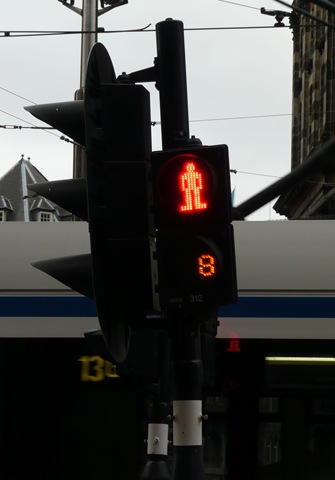
With the addition of countdown displays, pedestrians (involuntary users) know exactly how long they’ll have to wait before they can cross the road. It won’t make the wait any shorter, but will certainly make it much less frustrating.
Similar considerations apply also to other activities/devices (think of queues, public transport, and many others), in particular, with activities which involve waiting. But in case of traffic lights, a simple display can really make a significant difference.
What is more striking, though, is that traffic lights themselves are already being built to be aware of time (how could it work otherwise?). Adding that display just means exposing some meaningful information which is already present inside of them. If you think about that, it sounds so obvious that it’s surprising all traffic lights aren’t built that way.
Comments
about predictability, this article made me wonder about loading bars. i know for a fact that most can't be trusted (because the loading time really can't be calculated, as it's evident in file transfers via wireless connections, or because the bar is just an eye candy), and thus i distrust most loading bars or i even make fun of them: "look, it's going to take 56322 minutes to copy this txt from the server in the room below!". I don't have a clue on how the time remaining is calculated among OSes, programs or web-applications, but i wish they could somehow consider in factors like hard drive or wireless speeds, and if they were unknown, that they could compare to past similar events happened on the same computer/device.
ending the semi-offtopic rant, i would also welcome the "time left" innovation on most devices i have to use throughout the day, such as the traffic light mentioned. but i shrug as this is not likely to happen before the devices to be improved wear down beyond operativity and have to be replaced.
i also wonder, if traffic lights were conceived recently enough, would they have any kind of (open sourced preferably) software which could be improved from time to time with relatively low expenses?
Progress bars can be a pain, from a developer perspective. Even if you attempt to be accurate in your estimates, in some cases you have to consider factors you can't actually predict (think of noise in wireless networking, or heavy disk usage in case of disk file copying).
Yes, you can average, but sometimes that won't be enough as well.
There are some ways to make progress bars useful, though, but I think they deserve a post of their own (in one of the next episodes, maybe :P).
Back to topic, I agree with you: the biggest issue is the hardware. That's why here in Amsterdam not all traffic lights are that good. Just the *new* ones, of course.
wonderful issues altogether, you simply won a brand new reader.
What might you suggest about your publish that you
simply made a few days in the past? Any sure?